All Tied Up: Choosing the Right Boat Cleat for the Job

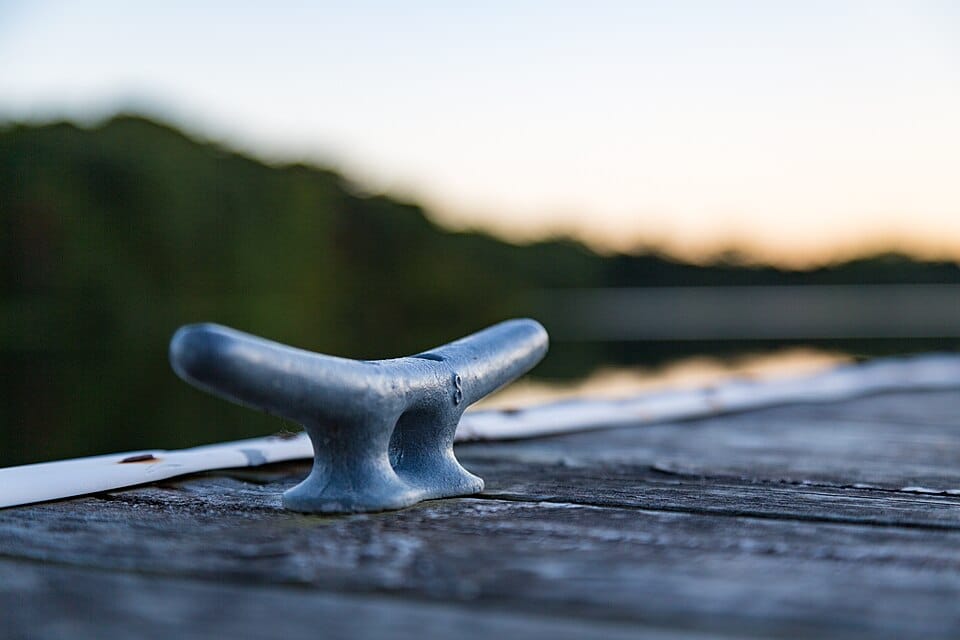
Boat cleats are small pieces of hardware with a big job: securing lines safely and efficiently. Whether you’re tying up at a marina, mooring at a private boat lift for rent, anchoring out or managing fenders, the right cleat makes all the difference. Understanding the most common types of boat cleats—and what each is best used for—can improve safety, reduce wear on lines and make line handling easier.
Horn Cleats
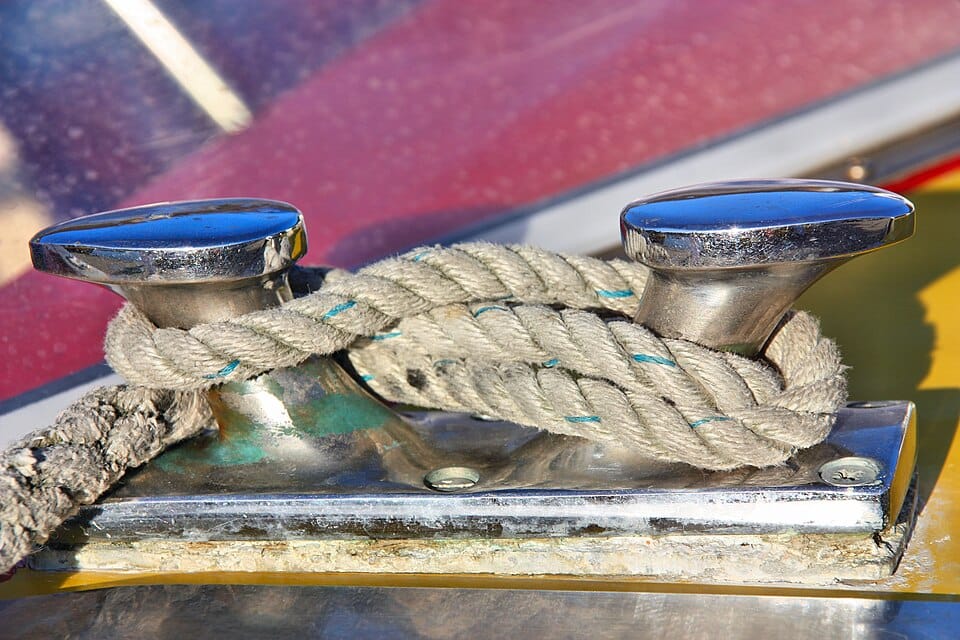
From the local marina to boat slip rentals near me, horn cleats are the most common cleats found on recreational boats. They’re easy to use and versatile, making them ideal for bow, stern and midship positions. They have two opposing “horns” that allow lines to be wrapped in a figure-eight pattern for secure holding.
Best uses:
- Dock lines
- Anchor lines
- General-purpose line securing
Cam Cleats
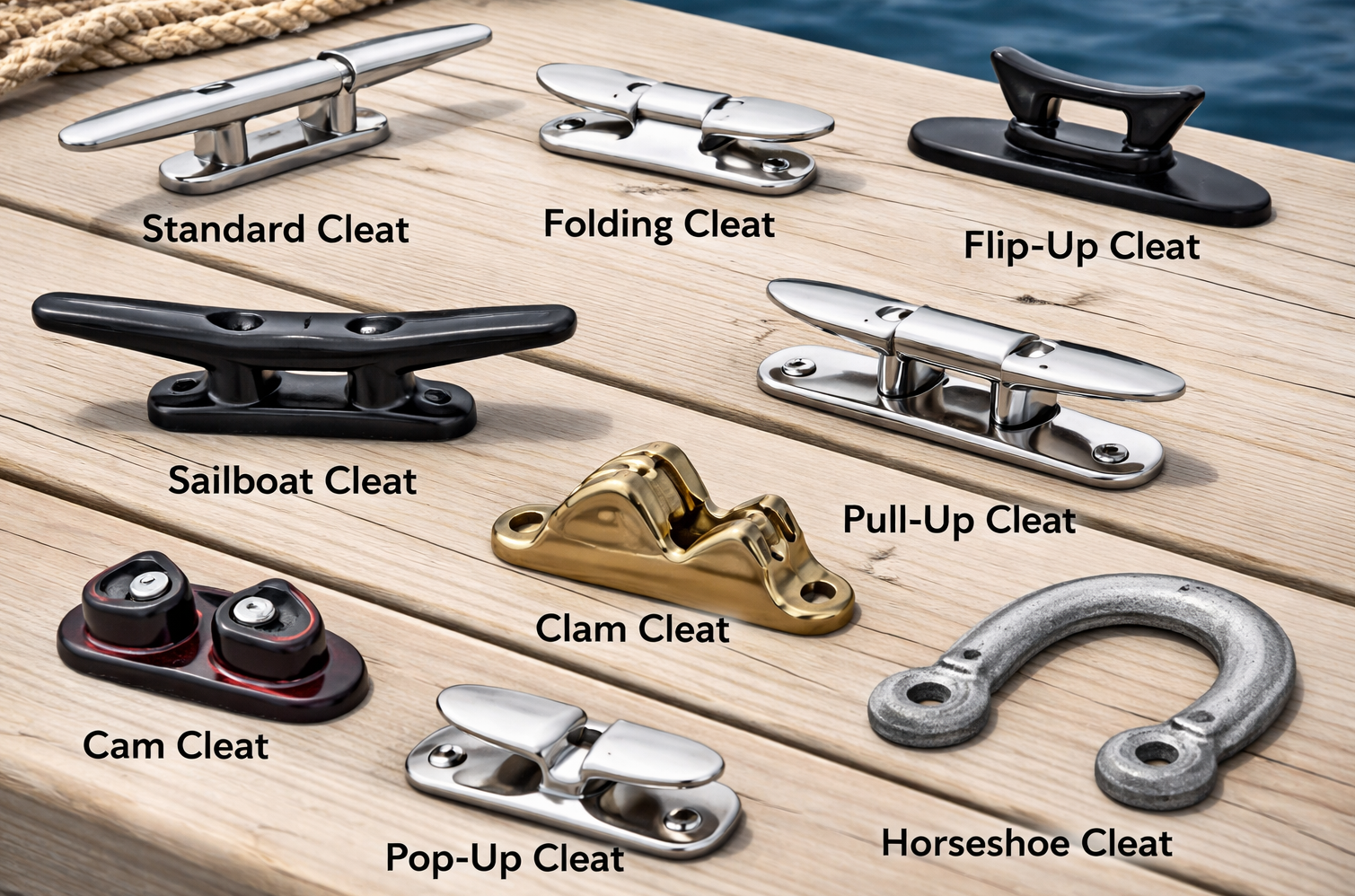
Cam cleats are popular on sailboats and small craft but are not intended for heavy loads or permanent mooring. They use spring-loaded cams with teeth that grip a line when it’s pulled tight and release it when lifted upward. They allow quick adjustment without tying knots.
Best uses:
- Sail control lines (sheets, control lines)
- Light-duty applications requiring frequent adjustment
Clam Cleats
Similar to cam cleats but without moving parts, clam cleats use a grooved, V-shaped design to hold lines under tension. The line is pulled down into the jaws and lifted out to release. Their simple design makes them durable, but they’re best suited for lighter loads.
Best uses:
- Control lines
- Dinghies and small sailboats
- Temporary line holding
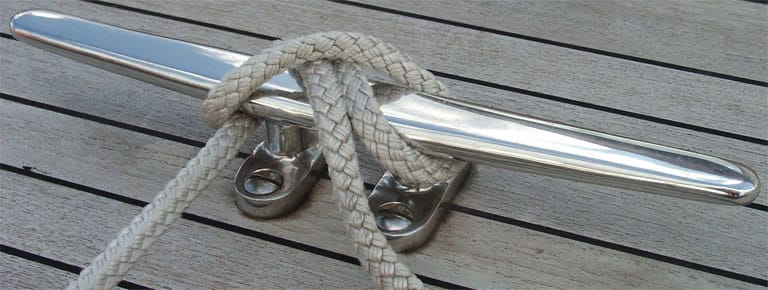
Pop-Up Cleats
Pop-up cleats lie flush with the deck when not in use and spring up when needed. This reduces tripping hazards and creates a cleaner deck profile. While convenient, pop-up cleats should be sized appropriately for the loads they’ll handle, as some models are less robust than fixed cleats.
Best uses:
- Dock lines on boats with limited deck space
- High-traffic deck areas
Pull-Up or Retractable Cleats
Often confused with pop-up cleats, retractable cleats are manually raised and lowered rather than spring-loaded. They sit flush when stowed and lock in place when deployed. These cleats offer a balance between strength and reduced deck clutter.
Best uses:
- Docking lines
- Boats prioritizing aesthetics and safety
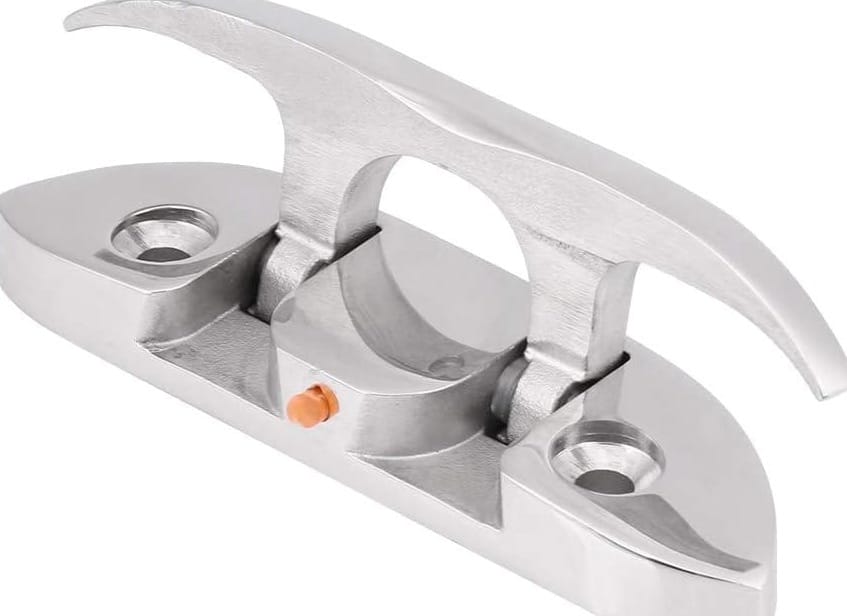
Folding Cleats
Folding cleats hinge downward when not in use, reducing snags and tripping hazards. They remain visible even when folded. They provide a good compromise between fixed and fully retractable designs.
Best uses:
- Dock lines
- Boats with walk-around decks
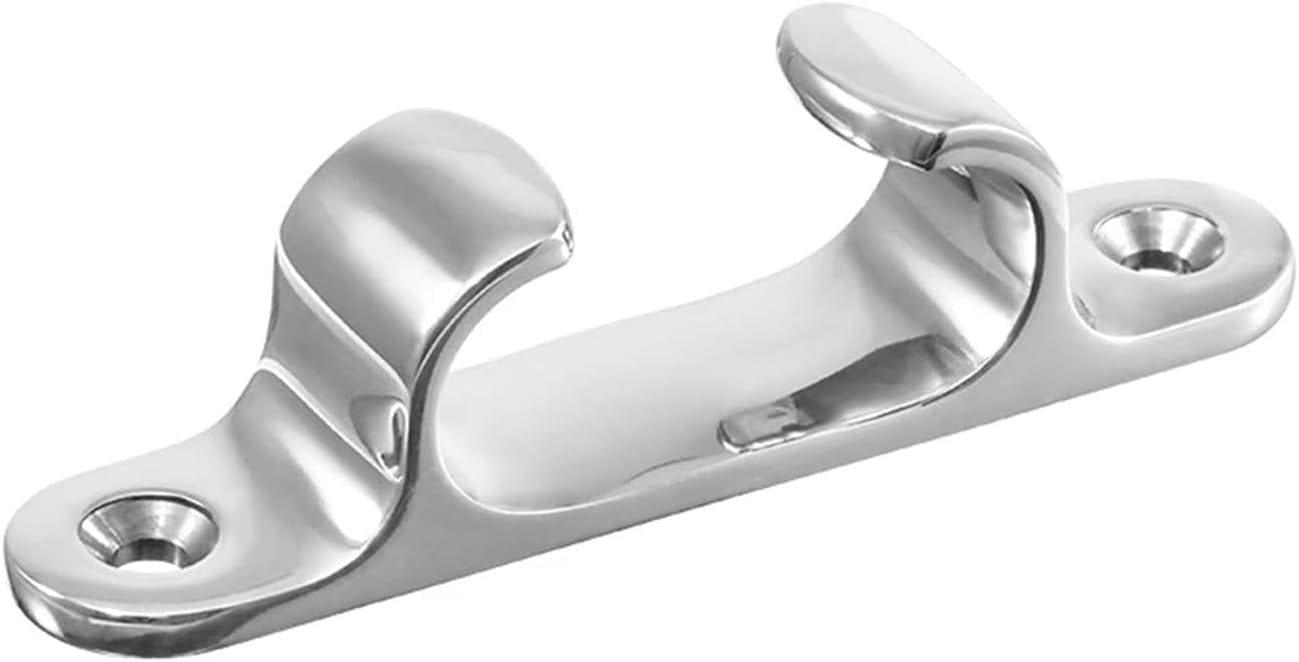
Cleat Chocks
Cleat chocks combine a cleat and chock into one unit, allowing the line to be secured while also guiding it over the gunwale without chafing. These are common on larger powerboats and yachts where line protection is critical.
Best uses:
- Dock lines under heavy load
- Boats that frequently dock in varying conditions
Mast Cleats
Mast cleats are mounted on the mast of a sailboat and are typically horn-style cleats. They’re designed for easy access while sailing or at the private boat dock rental.
Best uses:
- Halyards
- Reefing lines
- Control lines
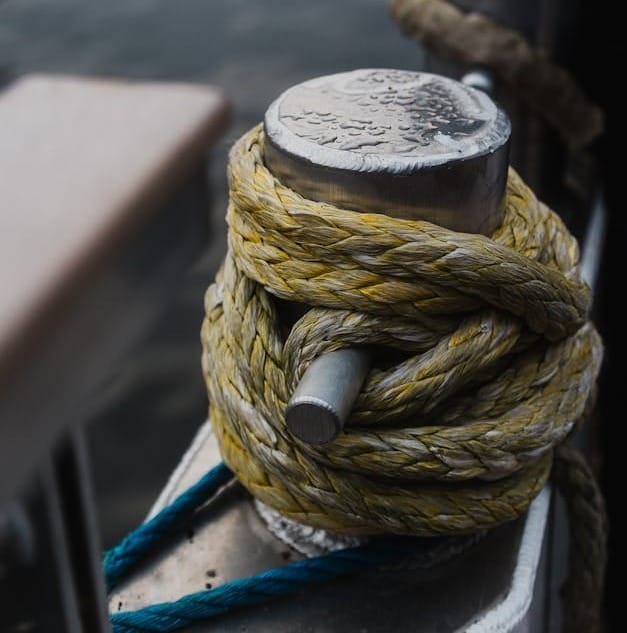
Bollard-Style Cleats
Not really a "cleat," per se, bollard cleats are more like a mooring post. They feature vertical posts rather than horizontal horns and are more common on commercial or heavy-duty vessels. Their shape allows multiple wraps and excellent holding power at the dock, marina or private boat slip for rent near me.
Best uses:
- Heavy mooring lines
- High-load applications
Choosing the Right Cleat
When selecting cleats for your boat, consider:
- Line diameter: The cleat must be sized to match the rope
- Load requirements: Mooring cleats must handle higher loads than control-line cleats
- Mounting location: Deck strength and backing plates are critical
- Ease of use: Especially important in rough conditions
Boat cleats may seem simple, but using the right type in the right place improves safety, protects gear and makes line handling more efficient. Whether you’re rigging a sailboat, docking a cruiser or outfitting a dinghy, understanding cleat types helps ensure your lines stay secure and ready when needed.