Coastal Sites: Lighthouses in New Brunswick, Canada

New Brunswick's rugged coastline stretches along both the Bay of Fundy and the Gulf of St. Lawrence, making lighthouses an enduring symbol of the province's maritime heritage. Built to guide ships through fog, tides and rocky shores, many of these historic beacons now serve as museums, viewpoints or beloved landmarks to visit from a marina or a private boat slip rental. Whether you're planning a coastal road trip or simply love maritime history, these are some of New Brunswick's most fascinating lighthouses.
Swallowtail Lighthouse (Grand Manan Island)
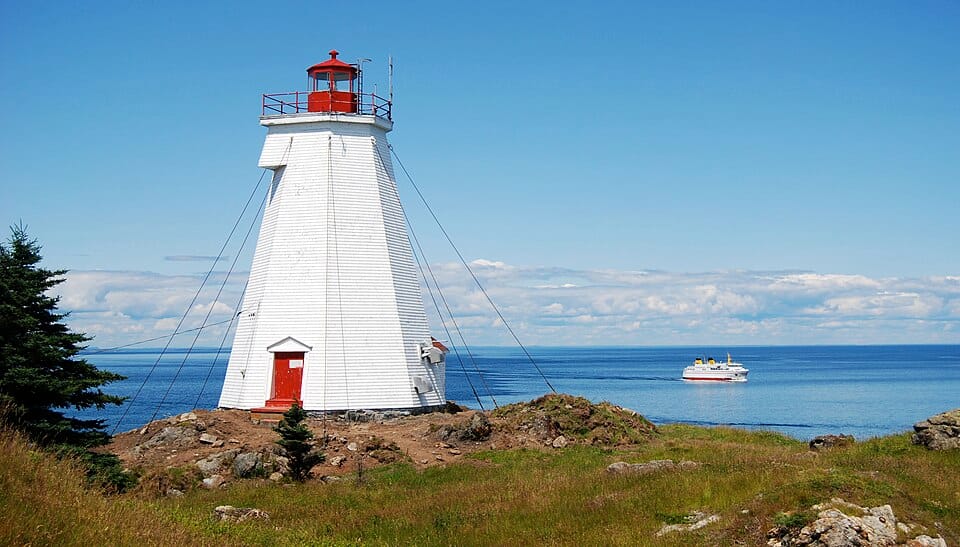
Set dramatically on cliffs overlooking the entrance to Grand Harbour, Swallowtail Lighthouse is one of New Brunswick's most photographed landmarks. Originally constructed in 1860, the white lighthouse with its distinctive red lantern sits atop towering cliffs connected by scenic walking trails and viewing platforms. Whales can sometimes be seen nearby. It's especially stunning at sunrise or sunset.
Mulholland Point Lighthouse
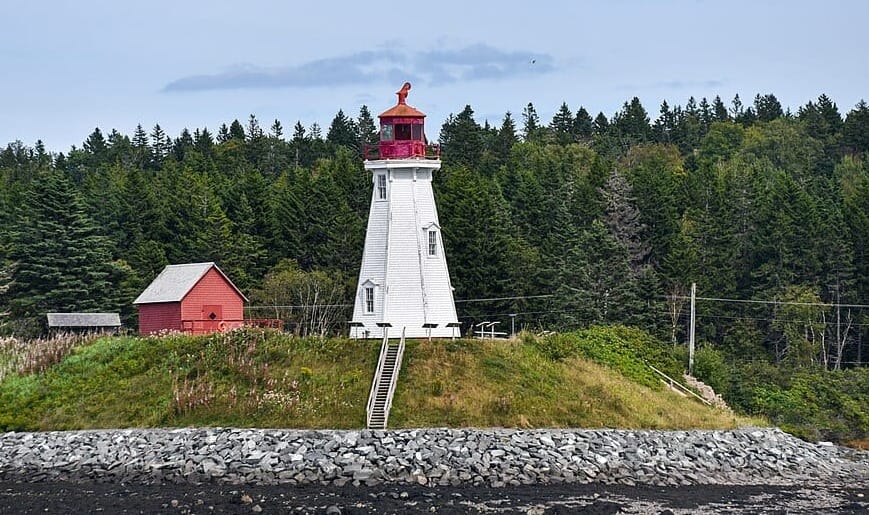
Located across from Lubec, Maine, Mulholland Point Lighthouse overlooks the narrow entrance to Passamaquoddy Bay. The current lighthouse, a white octagonal wooden structure, dates to 1885 and offers one of the best viewpoints for watching boats cross between Canada and the United States. It’s an excellent spot for photography and wildlife watching from private boat docks for rent near me. Located within Roosevelt Campobello International Park, it is the only lighthouse jointly owned by Canada and the United States. Although the tower is not open to visitors, the surrounding grounds offer scenic views of the international bridge, coastal waters and nearby marine life.
Head Harbour Lightstation (East Quoddy Lighthouse)
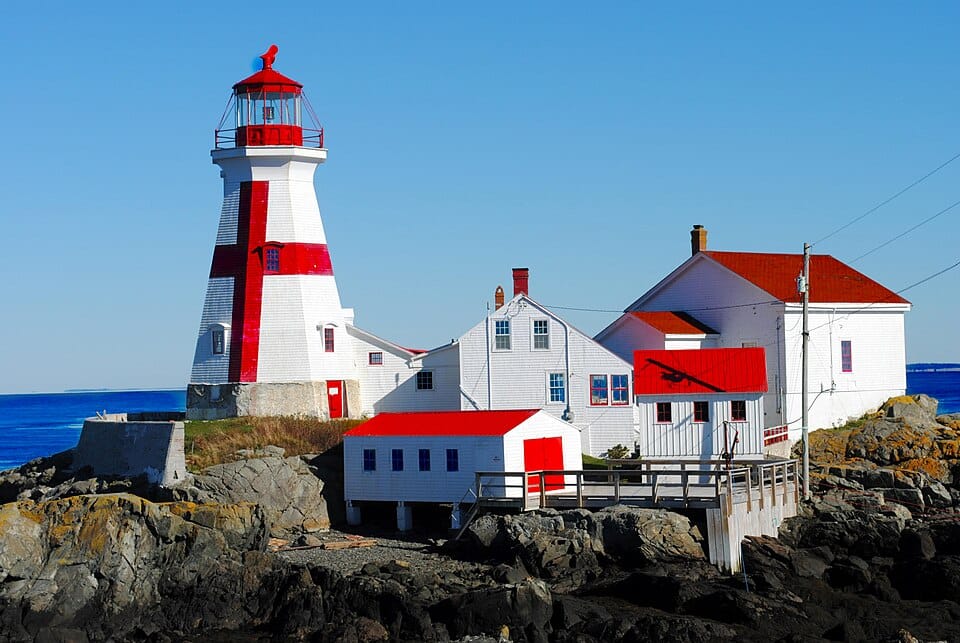
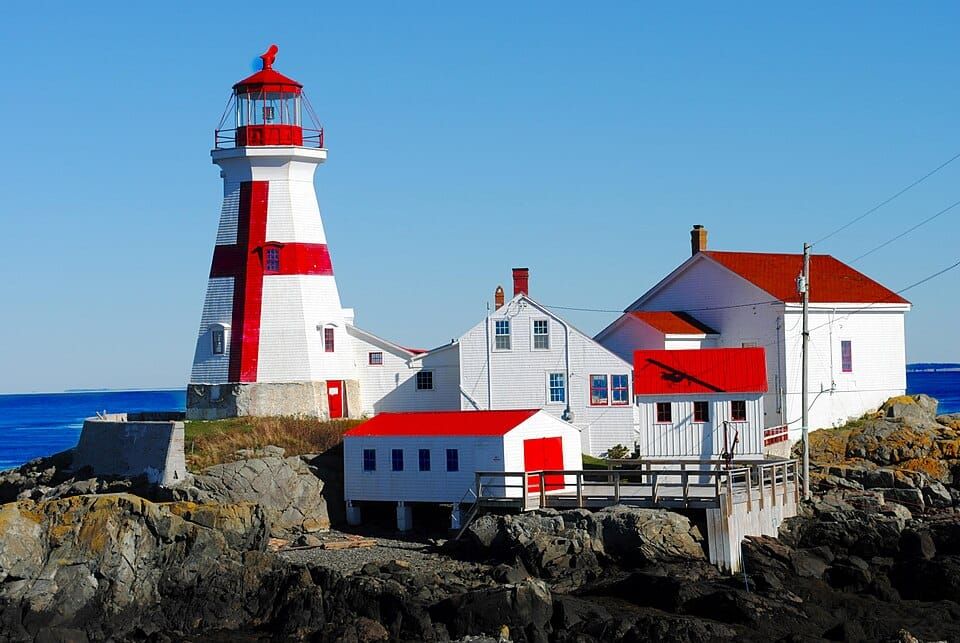
While situated on Campobello Island, the Head Harbour Lightstation (also known as the East Quoddy Lighthouse) is only accessible on foot at low tide via a rocky causeway. The journey itself is part of the adventure, rewarding visitors with dramatic ocean scenery, a unique island adventure and a beautifully preserved lighthouse. It marks the entrance to Passamaquoddy Bay near the Bay of Fundy. First established in 1881, the present square wooden lighthouse has guided vessels through waters known for powerful tides and frequent fog. Although no longer staffed, the lighthouse remains an active navigational aid.
Miscou Island Lighthouse
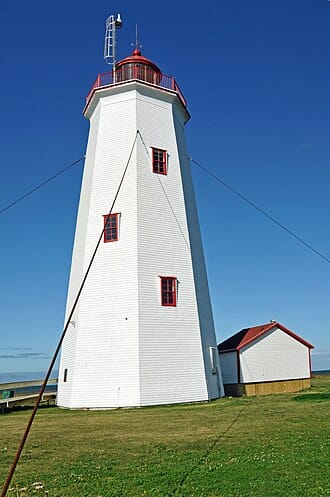
The historic octagonal wooden Miscou Island Lighthouse, built in 1856, is New Brunswick's oldest surviving wooden lighthouse. Located at the northeastern tip of the province, it overlooks the entrance to Chaleur Bay, as well as sandy beaches, peat bogs and important bird migration routes. There are hiking trails nearby.
Gagetown Range Rear Lighthouse
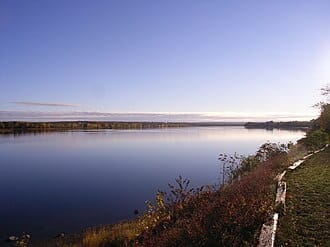
The Gagetown Range Rear Lighthouse sits inland along the Saint John River. Built in the late nineteenth century, the wooden lighthouse worked with its companion front range light to guide mariners safely through the river channel. Its simple yet functional design reflects the practical architecture of Canadian inland lighthouses. Range lights work in pairs, helping vessels safely navigate rivers and channels by aligning the front and rear lights. Although modern navigation has reduced its original role, the structure remains a valued reminder of New Brunswick’s river transportation history.
Machias Seal Island Lighthouse
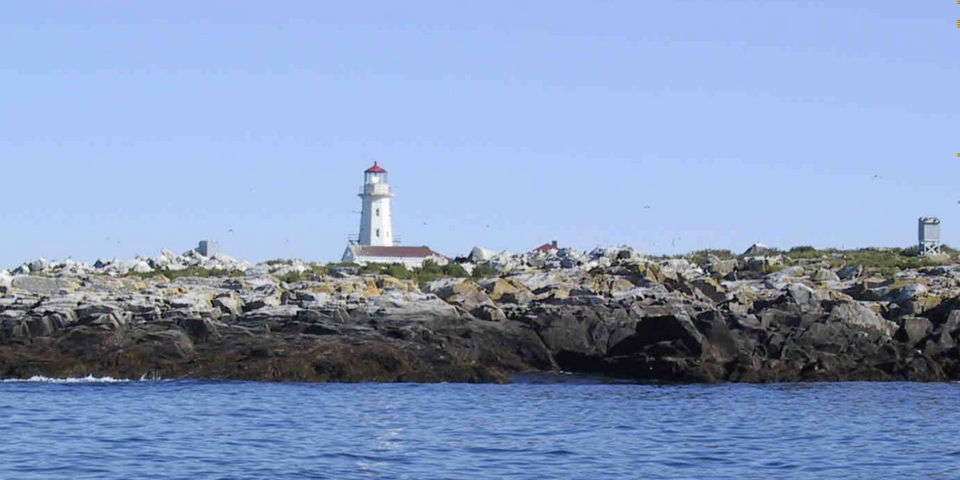
Perhaps New Brunswick's most remote lighthouse, Machias Seal Island Lighthouse stands on a small island famous for its Atlantic puffin colony. While the island itself is the subject of a long-standing territorial dispute between Canada and the United States, visitors can join seasonal boat tours that offer wildlife viewing from offshore at marinas or private boat lifts for rent.
New Brunswick's lighthouses are far more than picturesque landmarks, they tell the story of generations of sailors, fishermen and coastal communities that depended on these beacons for safe passage. From the dramatic cliffs of Grand Manan to the puffin-filled waters around Machias Seal Island, each lighthouse offers its own blend of history, scenery and maritime charm. Exploring these structures is one of the best ways to experience the province's coastal heritage.