Propeller Basics: Pitch, Diameter and Performance Explained

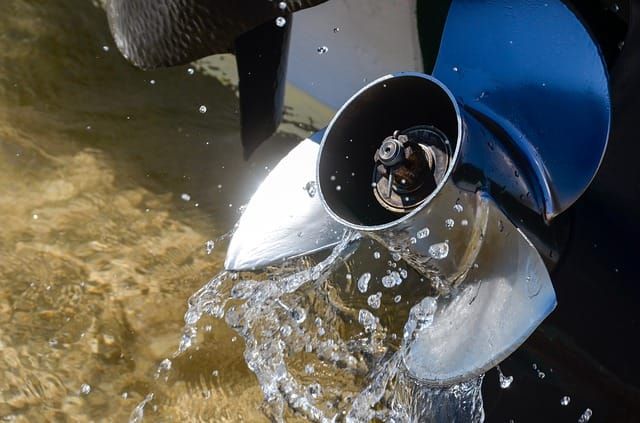
The propeller is easy to overlook. It sits underwater, largely out of sight, yet it has a tremendous influence on how a boat accelerates, cruises, handles a load and reaches its proper engine RPM.
Choosing the right propeller isn’t just a matter of finding one that fits the hub. Two of the most important specifications, pitch and diameter, directly affect the way an engine's power is converted into thrust. Understanding these basics can help boaters make better propeller choices and recognize when an existing prop may not be well matched to the boat.
What Does a Propeller Actually Do?
A propeller converts the engine's rotational power into thrust. As the blades rotate, they accelerate water backward, producing a reaction force that pushes the boat forward.
The propeller has to balance several competing requirements:
- Produce enough thrust to move the boat efficiently
- Allow the engine to reach its recommended wide-open-throttle RPM
- Provide acceptable acceleration and planing performance
- Avoid excessive slip, vibration and cavitation
- Deliver reasonable efficiency at typical cruising speeds
A propeller that works well on one boat may perform poorly on another, even if both use the same engine. Boat weight, hull design, gear ratio, engine power, intended use and operating conditions all matter.
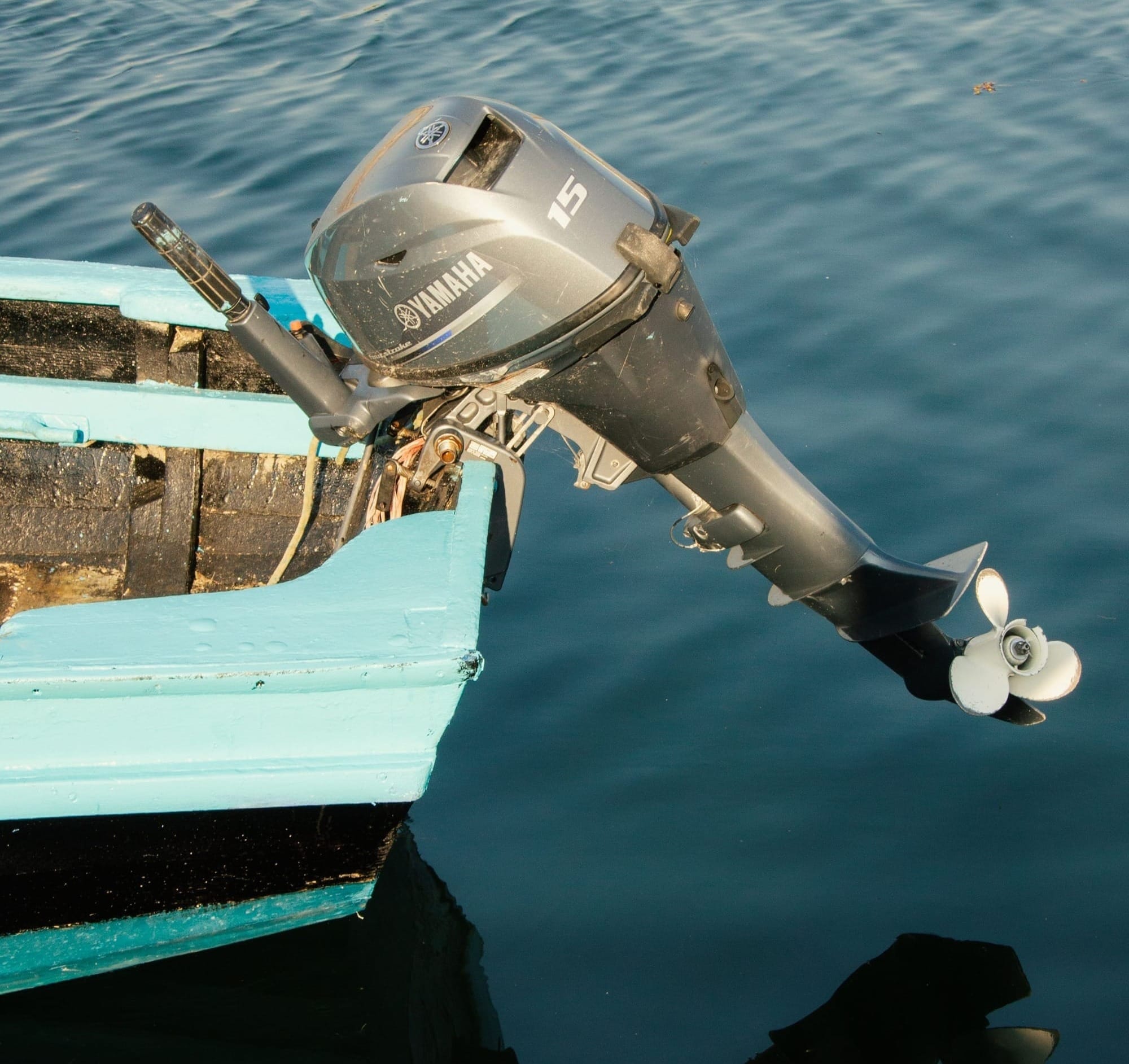
Propeller Pitch: The Distance It Tries to Travel
Pitch is usually expressed in inches and describes the theoretical distance a propeller would advance during one revolution if it were moving through a solid material without slipping. For example, a propeller marked 15-inch pitch theoretically moves forward 15 inches per revolution.
Water isn't a solid material, of course, so the boat doesn't actually advance that far per revolution. The difference between theoretical and actual movement is known as propeller slip.
Higher Pitch
Increasing pitch is somewhat like shifting to a higher gear in a car.
Generally, a higher-pitch propeller can:
- Increase potential top speed
- Reduce engine RPM at a given throttle setting
- Provide a better match for a lightly loaded boat that is already capable of reaching its target RPM
- Reduce acceleration if the engine cannot produce enough power to turn the propeller properly
Lower Pitch
A lower-pitch propeller is more like a lower gear.
It generally:
- Allows the engine to turn more RPM
- Improves acceleration and low-speed thrust
- Helps a heavily loaded boat get onto plane
- Can reduce top speed if the engine was already correctly propped
One common rule of thumb is that changing pitch by about 1 inch can alter wide-open-throttle RPM by roughly 150–200 RPM on many outboard applications. However, this is only an approximation. Actual results depend on the engine, propeller design, hull, gear ratio and operating conditions.
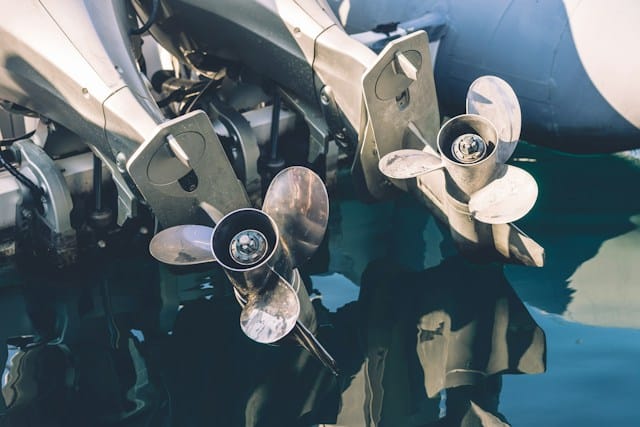
Propeller Diameter: Moving More Water
Diameter is the distance across the circle that’s made by the blade tips. If you imagine a line from one blade tip through the center of the propeller to the opposite side, that’s the diameter. Diameter influences how much water the propeller can act upon and how much torque is required to turn it when you’re cruising out from a marina or a private boat dock for rent.
A larger-diameter propeller generally:
- Moves more water
- Can produce strong thrust at lower speeds
- Requires more power to turn
- May be useful for heavier boats or applications where thrust is more important than absolute top speed
A smaller-diameter propeller generally:
- Requires less torque to turn
- Can be appropriate for higher-RPM applications
- May suit certain high-speed hull and engine combinations
Diameter is normally constrained by the boat and propulsion system. Clearance around the propeller is important, so simply installing the largest possible propeller isn't a recipe for better performance.
Pitch and Diameter Work Together
It’s tempting to think of pitch as the "speed" specification and diameter as the "power" specification. That’s a useful starting point, but reality is more complicated. Changing either dimension changes the propeller's load on the engine.
For example, suppose an outboard is rated to operate at 5,500–6,000 RPM at wide-open throttle, but it can only reach 5,200 RPM with the current propeller.
The engine is effectively being over-propped. A lower-pitch propeller may allow it to reach the manufacturer's recommended RPM range. On the other hand, if the engine turns well beyond its recommended maximum RPM, increasing pitch may increase the load and bring RPM down.
The objective is not simply to achieve the highest possible speed. The objective is to match the propeller to the engine and boat so the engine can operate within its specified RPM range while providing the desired performance.
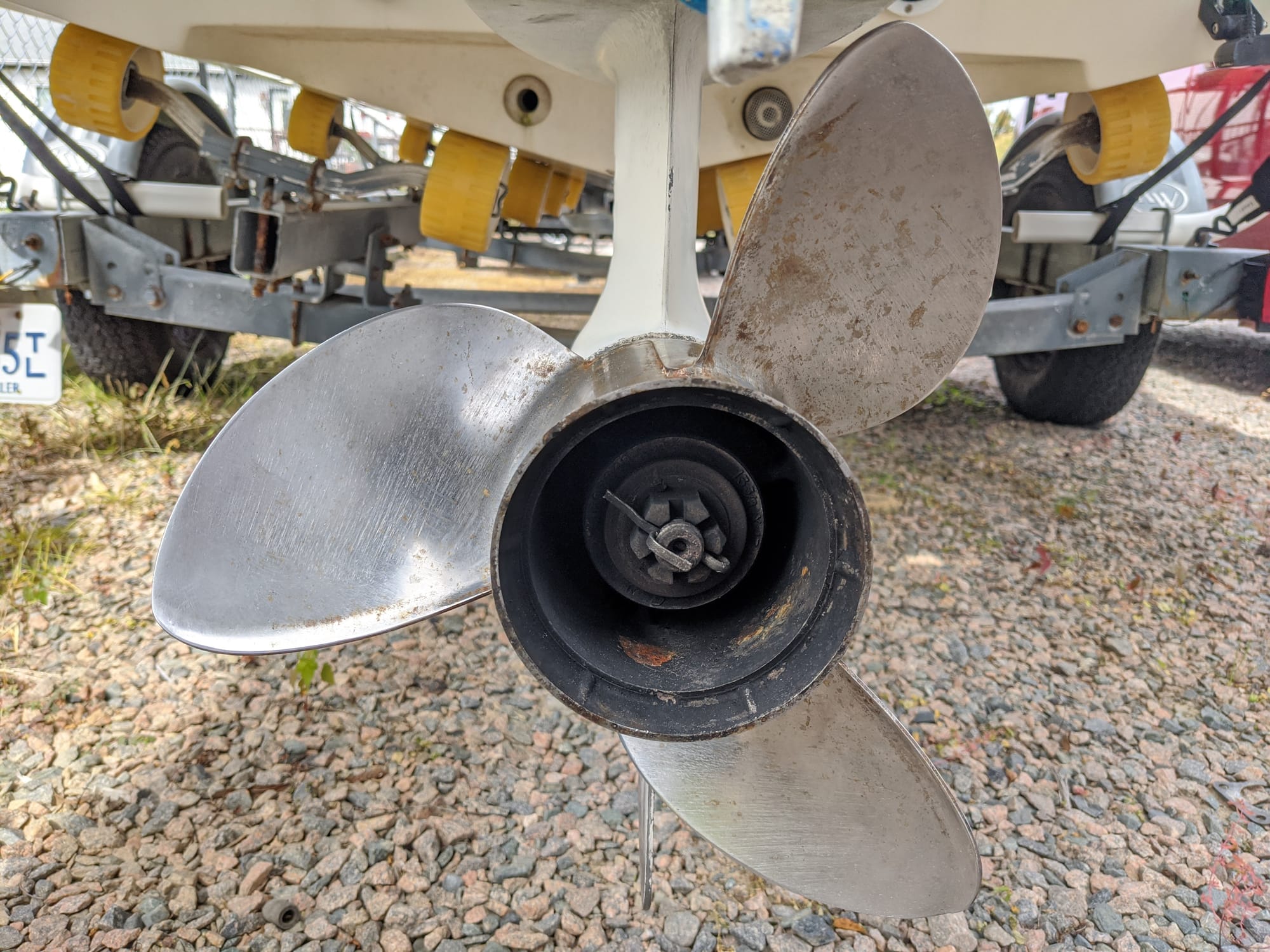
Three-Blade vs. Four-Blade Propellers
Blade count is another important part of the equation.
Three-Blade Propellers
- Three-blade propellers are common because they offer a good balance between acceleration, efficiency, and top speed.
- They are often a strong all-around choice for recreational boats.
Four-Blade Propellers
Adding a fourth blade increases blade area and can provide additional grip in the water.
A four-blade propeller may offer:
- Better acceleration
- Improved low-speed handling
- Better ability to maintain plane at lower speeds
- Improved grip when carrying heavy loads
- Reduced tendency to ventilate in some applications
The tradeoff can be a reduction in peak speed compared with an appropriately matched three-blade propeller. Again, there is no universal winner. The best choice depends on what the boat is expected to do when out on the water from a private boat lift rental or marina.
The Bottom Line
Propeller selection is a balancing act. Don't select a propeller based on top speed alone. A properly matched propeller should allow the engine to reach its specified RPM range, provide appropriate thrust for the boat's normal load, and deliver the performance characteristics you actually need.
Pitch and diameter are only part of the equation. Gear ratio, blade number, blade design, material, hull shape, engine height, trim, boat weight, and intended use all influence the final result when the boat is cruising away marinas or private boat slips near me for rent.
When all of the pieces are working together, the propeller becomes more than an underwater component. It becomes one of the most important tools for getting the best performance, efficiency and reliability from the entire propulsion system.