Adventures in Boating: The Great Dismal Swamp


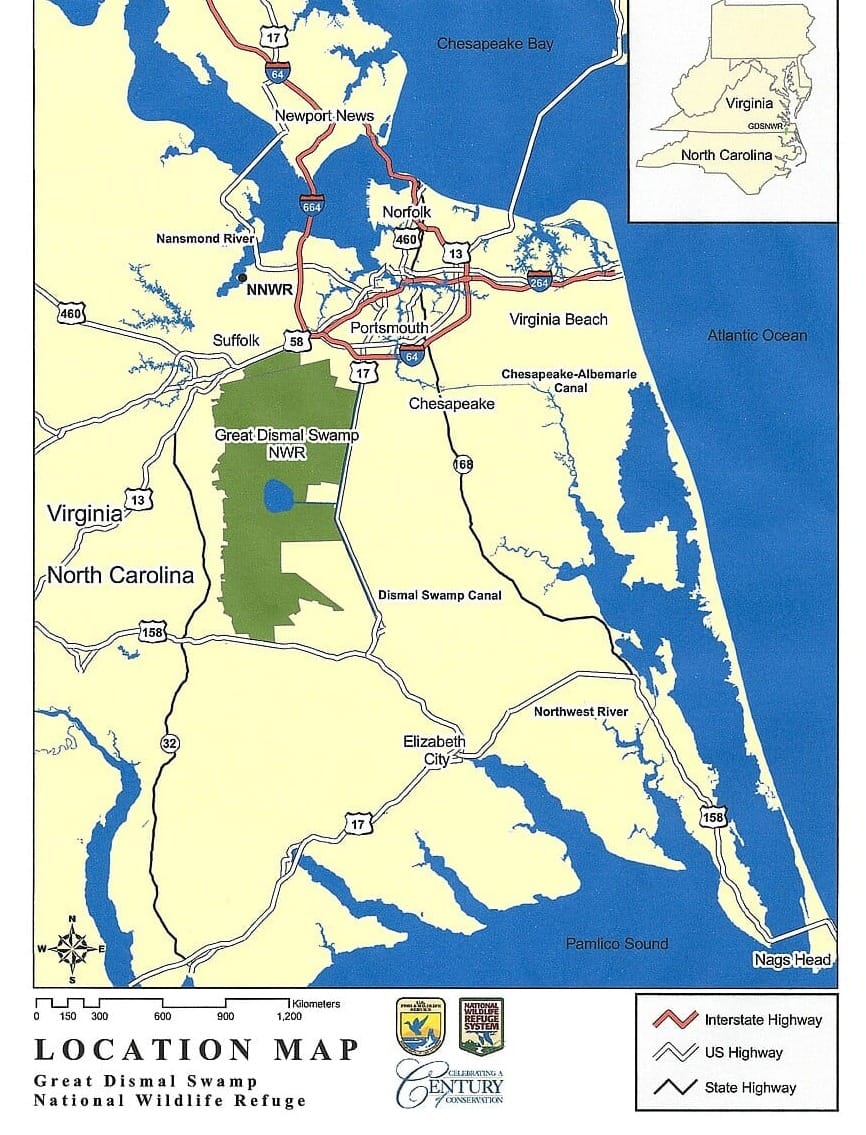
Few boating destinations in the Mid-Atlantic offer an experience quite like the Great Dismal Swamp. Stretching across southeastern Virginia and northeastern North Carolina, this vast wetland combines quiet waterways, dense forests, abundant wildlife and more than two centuries of history. For boaters embarking on a Great Loop excursion or taking a day cruise from a private boat lift for rent along the ICW, the area offers two distinct experiences: cruising the historic Dismal Swamp Canal and exploring the waters of Lake Drummond within the Great Dismal Swamp National Wildlife Refuge.
A Waterway Shaped by History
The Great Dismal Swamp was once considerably larger than it is today. Beginning in the colonial era, people sought to drain and develop portions of the swamp, digging an extensive network of ditches and canals. George Washington was an investor in one of the early ventures, the Dismal Swamp Company, which sought to drain the wetland and make its timber and agricultural potential more accessible.
The most important waterway eventually became the Dismal Swamp Canal. Construction began in the 1790s, and the canal opened to boat traffic in the early nineteenth century. It ultimately connected the Chesapeake Bay with Albemarle Sound, creating an inland transportation route that remains part of the Atlantic Intracoastal Waterway (ICW).
Today, traveling the canal provides a remarkable opportunity to experience a historic transportation corridor while surrounded by the forests and wetlands that characterize the Dismal Swamp.
Cruising the Dismal Swamp Canal
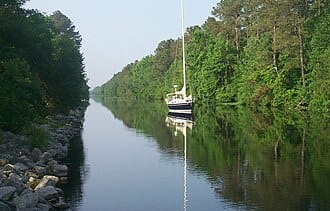
The Dismal Swamp Canal is the best choice for boaters interested in a traditional cruising experience from a private boat slip rental near me. The canal forms an alternate route of the Atlantic Intracoastal Waterway between the Chesapeake Bay and Albemarle Sound. The modern canal is maintained for navigation, and its controlled depth is approximately six feet.
The trip is deliberately slow. The canal is a no-wake waterway, making it better suited to relaxed cruising than to speed-oriented boating. The distance from Deep Creek to the Dismal Swamp Canal Welcome Center takes roughly three hours, while the section between the Welcome Center and South Mills takes about an hour under typical conditions.
Locks and drawbridges are an important part of the journey. The Dismal Swamp Canal's locks operate at scheduled times (currently 8:30 a.m., 11 a.m., 1:30 p.m. and 3:30 p.m.) and operators monitor Marine Channel 13. Because schedules and navigation conditions can change, boaters should check current information from the U.S. Army Corps of Engineers before making the trip.
The canal also has several places where boaters can stop, including the Dismal Swamp Canal Welcome Center, which has a 150-foot face dock. Mooring is available on a first-come, first-served basis, and overnight stays are permitted.

Lake Drummond: Boating in the Heart of the Swamp
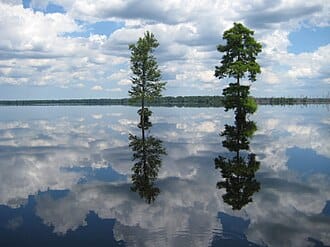
For a more secluded experience, Lake Drummond lies near the geographic heart of the Great Dismal Swamp. The roughly 3,100-acre natural lake is surrounded by forest and wetland and offers a very different setting from the straight, engineered channel of the canal. USGS describes Lake Drummond, the Feeder Ditch and the Dismal Swamp Canal as a connected water system associated with navigation.
Boating on Lake Drummond is permitted from sunrise to sunset. Motorized vessels are limited to engines of 25 horsepower or less, and the refuge warns that its internal ditches are not maintained for boat passage. In other words, visitors should not assume that the maze of historic ditches provides a navigable network for exploring the entire refuge by boat.
There are two principal ways to reach the lake. A boat ramp is available at the end of Lake Drummond Wildlife Drive, accessible from the Railroad Ditch entrance in Suffolk. There is also water-only access via the Feeder Ditch from the Dismal Swamp Canal near Ballahack Road in Chesapeake. The Wildlife Drive route provides a particularly convenient option for trailerable boats. It is a six-mile gravel road leading toward the lake, with a boat ramp and parking area at its end.
Wildlife and the Swamp Landscape
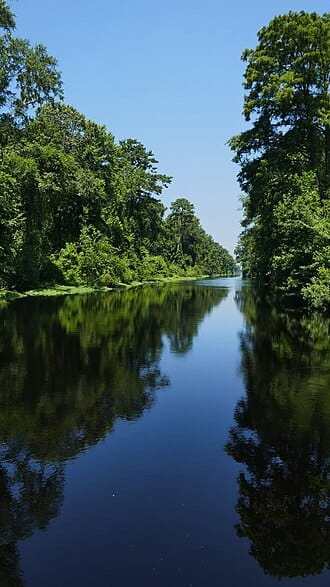
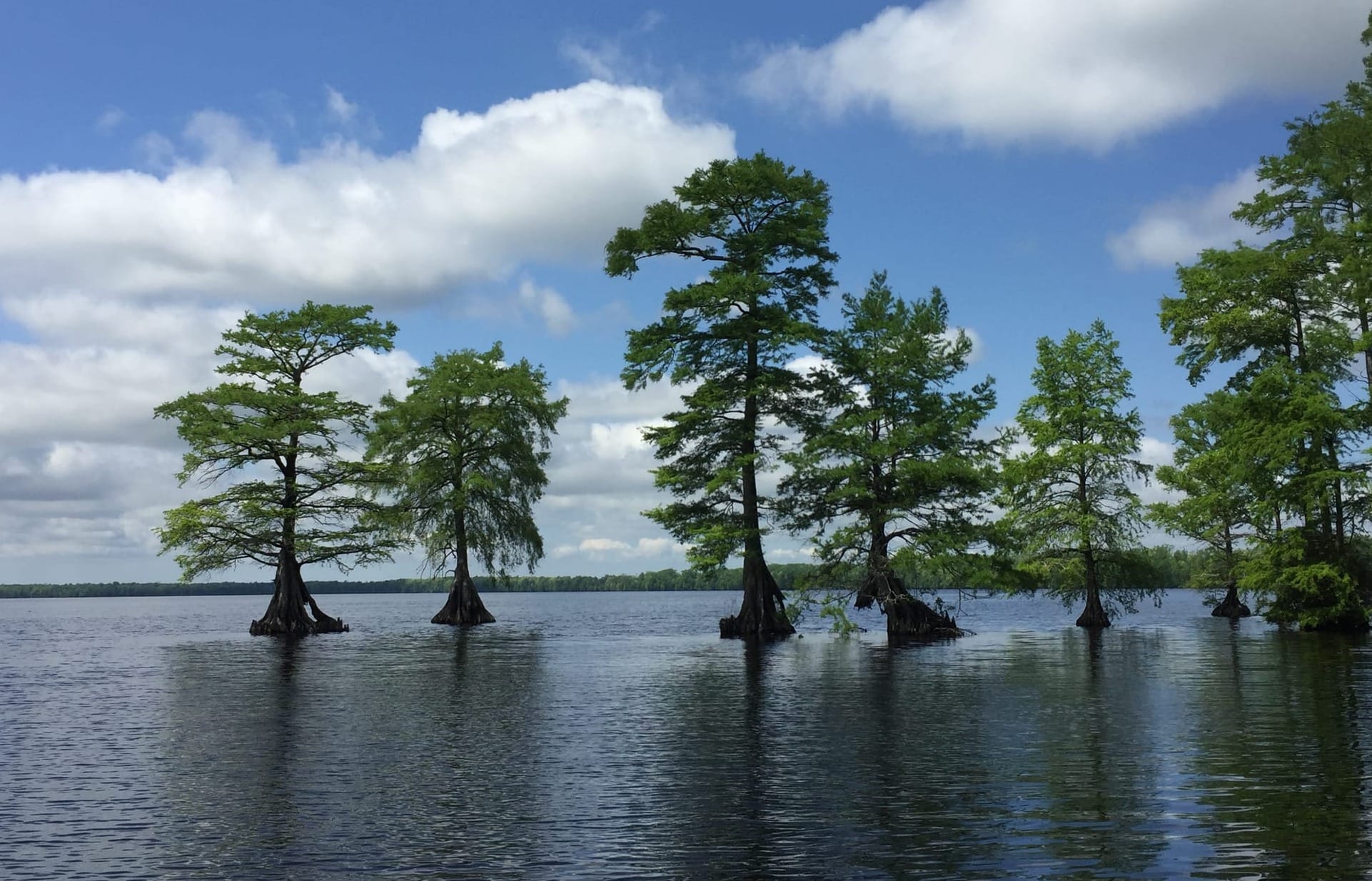
Boating here is less about dramatic scenery and more about immersion in a distinctive wetland environment. The refuge protects forests of bald cypress, Atlantic white cedar, pond pine, black gum and other wetland vegetation. The waterways and surrounding forest provide habitat for numerous species.
Depending on the season, boaters cruising out from a private boat dock for rent may encounter turtles, waterfowl, wading birds, river otters and other wildlife. Black bears also inhabit the refuge. Winter can bring large numbers of tundra swans and snow geese to Lake Drummond.
The best approach is to travel slowly and quietly. The swamp rewards attention to small details: a bird moving through the trees, an otter disappearing into dark water or the reflection of cypress and other trees on the lake.
Practical Considerations for Boaters
A trip to the Great Dismal Swamp rewards careful preparation. Conditions and access rules can vary, so checking the latest information from the refuge and the Army Corps of Engineers is important.
For Lake Drummond, remember these basics:
- Boating is permitted from sunrise to sunset.
- Motorized boats are limited to 25 horsepower.
- The refuge's ditches are not maintained as navigable boating routes.
- Swimming is prohibited.
- Fishing from boats is permitted in accordance with Virginia regulations. A Virginia fishing license is required.
- Cell service can be limited in parts of the refuge.
- During warm weather, insect repellent is advisable.
For canal cruising, boaters should pay close attention to lock and bridge schedules, maintain a safe distance from other vessels and respect the canal's no-wake requirements. Current navigation notices are particularly important because construction or maintenance can temporarily affect portions of the waterway.
Two Ways to Experience One Remarkable Landscape
Boating along the Great Dismal Swamp is really two experiences in one. The Dismal Swamp Canal is a historic cruising route where locks, bridges, docks and a carefully maintained navigation channel connect Chesapeake Bay and Albemarle Sound. In contrast, Lake Drummond offers a quieter excursion into the interior of the refuge, where it’s surrounded by forest and wetland.
Neither experience is about speed. The character of the Great Dismal Swamp lies in its stillness, history and sense of remoteness. Whether moving slowly down the historic canal or drifting across the dark waters of Lake Drummond, boaters have an opportunity to experience a landscape that has resisted easy transformation for centuries.